Why choosing professionals for spray foam removal saves effort
Exactly How Spray Foam Insulation Can Change Your Living Area and Lower Power Expenses
Spray foam insulation is obtaining interest for its capacity to boost energy effectiveness in homes. By creating a tight seal, it reduces air leaks and maintains secure interior temperature levels. This ingenious option not only enhances comfort yet also especially lowers energy prices. As home owners seek reliable ways to boost their space, the benefits of spray foam become progressively evident. What are the details benefits and factors to consider that make this insulation method a preferred selection?
Understanding Spray Foam Insulation

There are two main types of spray foam insulation: open-cell and closed-cell. Open-cell foam is lighter and more versatile, giving soundproofing high qualities, while closed-cell foam is denser and much more rigid, using exceptional wetness resistance and insulation value. The application process requires specialized tools and knowledge to ensure correct setup.
Comprehending the homes and kinds of spray foam insulation is vital for house owners and contractors looking for effective options for insulation and air securing. This expertise lays the groundwork for checking out the particular advantages related to its usage.
Benefits of Spray Foam Insulation for Power Efficiency
Spray foam insulation offers significant benefits for energy efficiency. spray foam removal. Its remarkable air securing capabilities lessen air leakages, causing decreased power loss in buildings and homes. Consequently, this causes long-lasting price financial savings on heating and cooling expenditures
Superior Air Securing
When thinking about power effectiveness in buildings, premium air sealing becomes an essential advantage of spray foam insulation. Unlike traditional insulation materials, spray foam increases upon application, loading spaces and splits that might or else allow air leakage. This closed obstacle significantly reduces the infiltration of outdoor air, which can bring about temperature changes and boosted power consumption. By offering an effective seal, spray foam insulation boosts the total thermal efficiency of a space, aiding preserve a constant interior environment. This not only adds to comfort however likewise decreases the work on home heating and cooling down systems. Consequently, homeowners can experience better power effectiveness and potentially lower power bills, making spray foam insulation a crucial factor to consider for contemporary energy-conscious structure methods.
Decreased Power Loss
Effective air securing with spray foam insulation results in a substantial decrease in energy loss within structures. This insulation product expands on application, filling up gaps and fractures that typical insulation frequently misses. By developing a limited obstacle against air seepage, spray foam lessens drafts and temperature level fluctuations, ensuring that conditioned air continues to be inside the space. Homeowners experience a more stable interior climate, minimizing the requirement for excessive heating or air conditioning. This boosted power efficiency not just adds to a more comfortable living environment however additionally aids to preserve the honesty of architectural components by minimizing dampness accumulation. On the whole, spray foam insulation serves as an efficient remedy for lessening power loss and enhancing overall structure performance.
Long-Term Cost Cost Savings
Buying spray foam insulation usually causes significant long-term cost financial savings for home owners and services alike. This insulation type efficiently seals splits and spaces, minimizing energy consumption by preserving regular indoor temperature levels. Building proprietors experience reduced heating and cooling prices, significantly influencing their month-to-month utility costs. Additionally, spray foam's toughness minimizes the demand for constant replacements or fixings, better improving its cost-effectiveness in time. Numerous customers also take advantage of potential tax incentives or rebates related to energy-efficient upgrades, which can offset preliminary installation expenses. By boosting power performance and reducing upkeep prices, spray foam insulation verifies to be a smart economic investment, inevitably contributing to a much healthier profits for both property and business areas.
How Spray Foam Insulation Works
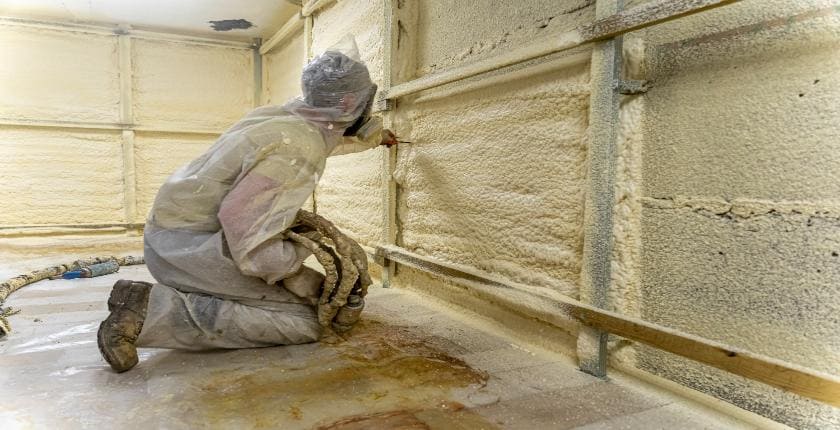
Spray foam insulation operates via an one-of-a-kind development procedure that allows it to fill gaps and crevices within a structure. When applied, the foam increases swiftly, creating an airtight seal that greatly improves thermal resistance. This effective barrier not just boosts energy efficiency however additionally adds to overall comfort in the living space.
Insulation Development Refine
When used, spray foam insulation undergoes an one-of-a-kind expansion process that allows it to fill up spaces and develop a smooth barrier against air and wetness. This two-component system contains isocyanate and polyol material, which react upon blending to produce a foam that expands as much as 30 times its original volume. As it increases, the foam follows various surfaces, properly securing fractures and holes that standard insulation techniques may miss. The quick development aids to produce a limited seal, decreasing air leakage and boosting overall power effectiveness. As soon as treated, the foam strengthens into a long lasting, lightweight product that keeps its shape, providing resilient insulation and defense for structures and homes.
Thermal Resistance Advantages
Different insulation materials exist, spray foam insulation stands out due to its exceptional thermal resistance residential or commercial properties. This unique insulation kind expands upon application, filling up voids and developing a seamless obstacle that decreases air leakages. By effectively securing the building envelope, spray foam aids preserve a regular inside temperature, decreasing the dependence on heating and cooling systems. Its high R-value per inch gives remarkable insulation compared to traditional materials like fiberglass or cellulose. As a result, property owners experience improved energy effectiveness, leading to reduced utility bills. Furthermore, the thermal resistance of spray foam adds to boosted convenience, avoiding drafts and cool areas. Generally, these features make spray foam insulation a useful investment for changing advertising and living areas power savings.
Comparing Spray Foam to Traditional Insulation
While traditional insulation materials like fiberglass and cellulose have actually been commonly utilized for decades, spray foam insulation has actually arised as a compelling option as a result of its unique residential or commercial properties and efficiency advantages. Spray foam offers remarkable air-sealing capacities, reducing air leakages that can cause energy loss. This not only boosts energy performance yet additionally enhances indoor air top quality by minimizing the seepage of toxins and irritants.
In comparison, traditional materials typically leave gaps and voids, which can jeopardize thermal performance. Additionally, spray foam increases upon application, satisfying uneven forms and hard-to-reach areas, thus giving an extra full insulation obstacle.
Spray foam has a higher R-value per inch contrasted to fiberglass and cellulose, indicating it provides far better thermal resistance with much less product. These differences make spray foam insulation an extra resilient and reliable option for house owners seeking to optimize power effectiveness and comfort in their living rooms.
Installment Process and Considerations
The installment of spray foam insulation includes a specific procedure that varies substantially from conventional methods. Initially, the this page area to be shielded must be thoroughly prepared, which consists of sealing any type of gaps and guaranteeing surface areas are clean. The application needs specific devices to mix and spray the foam, which broadens upon get in touch with. Experts commonly manage this task, as it demands knowledge to attain suitable coverage and efficiency.
Considerations during setup consist of picking the proper kind of foam-- open-cell or closed-cell-- based upon the details needs of the area. Appropriate ventilation is necessary during the application procedure to minimize fumes. House owners need to likewise understand the curing time, which can impact when the area can be inhabited. Making certain conformity with local building codes is crucial to ensure a risk-free and effective insulation solution.
Lasting Cost Savings and Ecological Effect
Purchasing spray foam insulation not only enhances power efficiency but discover this info here likewise generates significant long-lasting cost savings for homeowners. This type of insulation develops an impermeable seal, decreasing energy usage for heating & cooling by as much as 50%. Consequently, homeowners can expect lower utility costs gradually, causing considerable cost savings that can balance out the preliminary setup cost.
Spray foam insulation contributes favorably to the atmosphere. By lowering energy use, it reduces greenhouse gas exhausts connected with energy manufacturing. The durability of spray foam, which can last numerous years, minimizes the demand for frequent substitutes, even more decreasing waste in landfills. In addition, lots of spray foam items are made from renewable energies, boosting their eco-friendliness. In sum, spray foam insulation not just boosts living convenience yet likewise supports sustainable techniques, benefiting both property owners and the planet.
Frequently Asked Inquiries
Is Spray Foam Insulation Safe for My Family and Pets?
When set up properly, spray foam insulation is generally risk-free for family pets and households. Correct air flow and healing time are essential to decrease any kind of prospective health and wellness threats throughout application. Always consult specialists for best safety techniques.
The Length Of Time Does Spray Foam Insulation Last?
Spray foam insulation usually lasts between 20 to three decades, depending on ecological variables and installment high quality. Its resilience makes it a preferred option for homeowners seeking long-lasting power efficiency and comfort in their home.
Can I Set Up Spray Foam Insulation Myself?
Mounting spray foam insulation oneself is feasible, yet it calls for specific devices and security precautions. Many professionals recommend employing specialists for ideal results, as incorrect installation can lead to inefficiencies and potential carcinogen.
What Are the Possible Health And Wellness Dangers of Spray Foam?
Prospective health and wellness threats of spray foam insulation consist of respiratory concerns, skin irritation, and allergic responses due to chemical exposure throughout setup. Appropriate ventilation and protective equipment are important to reduce these threats for occupants and installers.
Does Spray Foam Insulation Require Unique Maintenance?
Spray foam insulation generally requires marginal maintenance, as it does not settle or deteriorate over time (spray foam removal). Regular examinations for moisture concerns or damages are a good idea to assure its effectiveness and long life in the insulated area.
Open-cell foam is lighter and a lot more adaptable, supplying soundproofing high qualities, while closed-cell dig this foam is denser and extra stiff, supplying exceptional wetness resistance and insulation value. Recognizing the buildings and kinds of spray foam insulation is important for house owners and home builders looking for effective options for insulation and air sealing. When thinking about energy performance in structures, premium air securing arises as a vital benefit of spray foam insulation. Different insulation materials exist, spray foam insulation stands out due to its extraordinary thermal resistance buildings. While traditional insulation materials like fiberglass and cellulose have actually been commonly made use of for decades, spray foam insulation has actually arised as a compelling choice due to its special residential properties and performance advantages.